
Floors Built for Concrete Substrate Conditions
Flooring Installation in Victoria for slab homes where material and adhesive must match substrate
South Texas slab homes in the Cuero Highway belt and Tanglewood neighborhoods demand flooring materials and adhesive systems chosen specifically for concrete substrate rather than wood subfloor assumptions that fail within the first year. Jesse's Custom Tile And Remodeling specs material and adhesive matched to concrete slab conditions, addressing moisture transmission, flatness tolerances, and thermal expansion that differ fundamentally from installations over plywood. Transition strip planning across room thresholds and height changes is handled during the layout phase, not patched in after the field is set and gaps become visible.
The installation process includes slab moisture testing using calcium chloride or relative humidity probes to determine whether moisture barriers are required before flooring is installed. Flatness is measured across the slab surface to identify grinding or leveling needs, because luxury vinyl plank, hardwood, and tile all have different tolerance requirements. Adhesive selection depends on these test results, with moisture-mitigating products specified when vapor transmission exceeds flooring manufacturer limits.
Schedule a slab assessment to measure moisture levels and flatness before flooring material is selected or ordered.
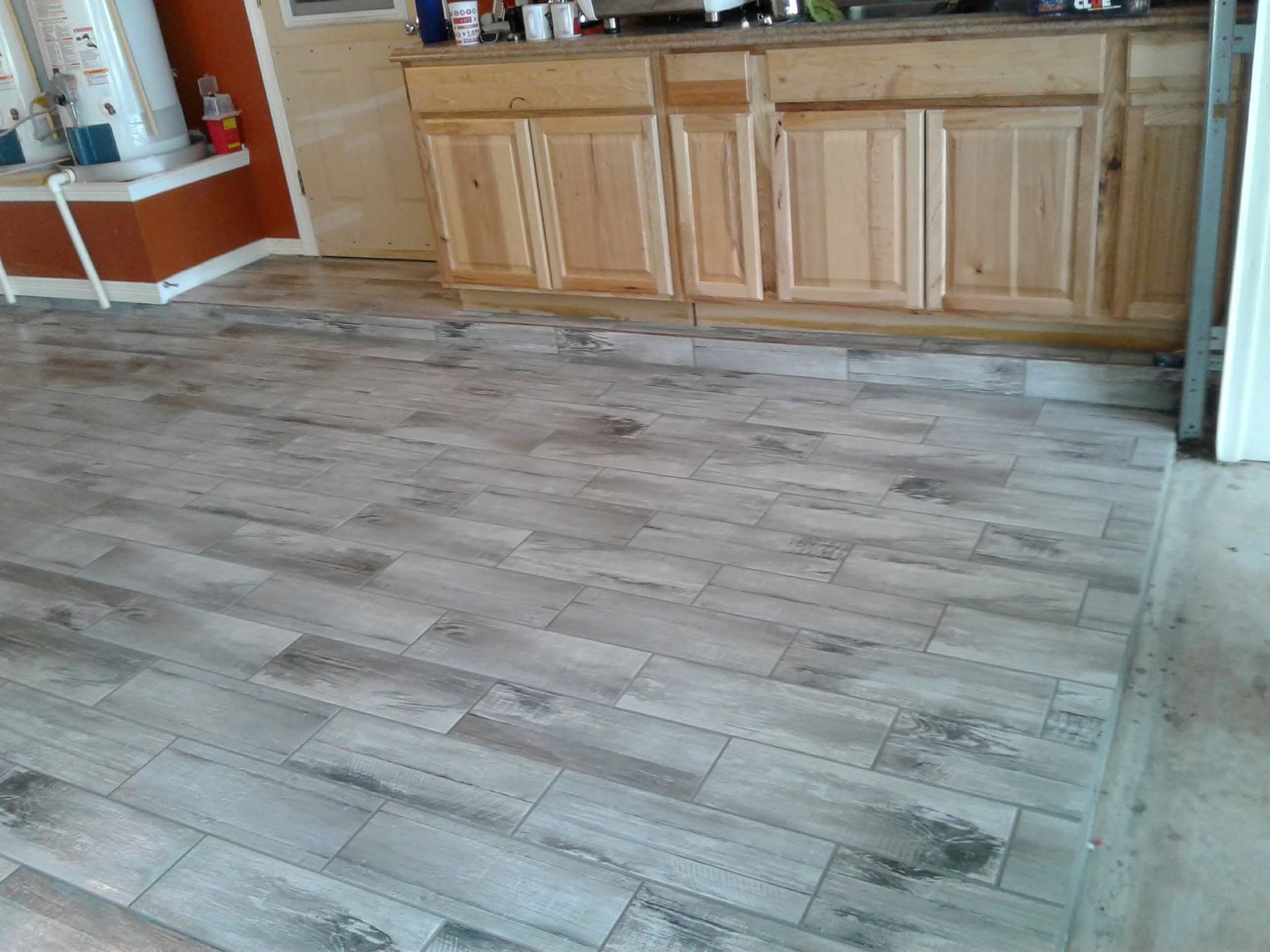
What Changes After Flooring Installation Completes
Slab preparation involves grinding high spots, filling low areas with leveling compound, and applying primers or moisture barriers based on test results from the initial assessment. Transition strips are measured and ordered to match flooring thickness and threshold widths, ensuring height changes between rooms don't create trip hazards or gaps where flooring ends. Flooring is then installed using adhesive systems rated for concrete moisture levels, with expansion gaps maintained at walls and fixed objects to prevent buckling as materials expand and contract.
After installation, you'll notice floors that feel solid without hollow sounds when walked on, transition strips that sit flush without lips between rooms, and flooring that remains flat without cupping, peaking, or gaps opening at seams. Colors and patterns align consistently across the installation, and baseboards reinstall tightly against the new floor height without visible gaps underneath.
Installation duration depends on room size, furniture moving requirements, and adhesive cure times, with most projects requiring furniture removal, slab preparation, material acclimation, installation, and cure time spread across several days. Furniture can be moved back once adhesive fully cures and the floor is ready for normal traffic loads.
Questions Before Starting Your Project
Flooring installation on concrete slabs requires understanding how substrate conditions affect material performance and what preparation ensures long-term results in South Texas homes.
What flooring materials work best on concrete slabs in Victoria?
Luxury vinyl plank, porcelain tile, and engineered hardwood perform well on concrete when properly installed with moisture-appropriate adhesives, while solid hardwood typically requires additional moisture barriers or alternative fastening methods to prevent cupping from slab moisture.
How does slab moisture affect flooring installation?
Concrete slabs transmit water vapor that can break down adhesives, cause vinyl flooring to debond, and make hardwood cup or buckle if moisture levels exceed manufacturer tolerances and appropriate barriers aren't installed beneath the flooring.
When does a concrete slab need leveling before flooring is installed?
Leveling becomes necessary when high and low spots exceed the flooring manufacturer's flatness tolerance, which varies by product but typically ranges from one-eighth to three-sixteenths inch over ten feet depending on plank width and rigidity.
What happens to baseboards during flooring installation?
Baseboards are typically removed before installation to allow flooring to extend beneath them for a clean finished look, then reinstalled at the new floor height after installation completes and adhesive cures.
How long before furniture can be moved back onto new flooring?
Timing depends on adhesive cure rates and flooring type, but most installations require at least 24 hours before light furniture placement and 48 to 72 hours before heavy items or appliances are moved across the surface.
Jesse's Custom Tile And Remodeling matches flooring materials and adhesive systems to actual slab conditions in Victoria homes, testing substrate before installation rather than addressing problems after failures occur. Arrange a property evaluation to measure slab moisture and flatness for your flooring project.